WE INSPIRE. WE DREAM. WE ACHIEVE.
The Mount Vernon School District purposefully prepares every student for success by ensuring inclusion and belonging, providing high-quality instruction, and empowering learners with the skills and confidence to thrive in a diverse and dynamic world.
On this page
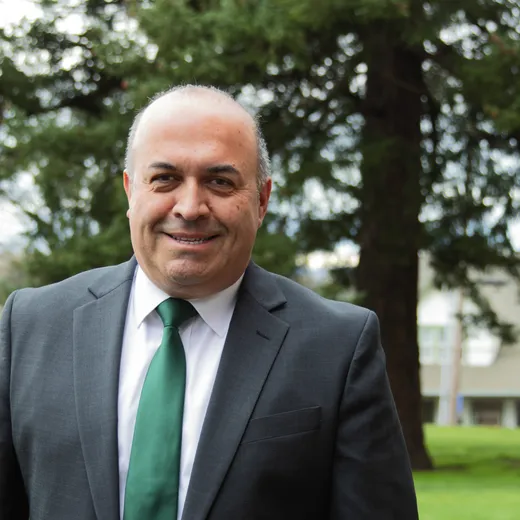
A Message from the Superintendent
Mount Vernon families, I am excited to share our new strategic plan, a vision and roadmap for the future of our schools. Shaped by the voices of our Mount Vernon School District community, this plan will lead our district over the next six years, enhancing policies, programs, and practices that prioritize student achievement, equity, and innovation. The process of developing this plan was truly collaborative, with more than 2,700 educators, parents, students, administrators, community members, and board members lending their voices to help create this roadmap.
Together, we created a plan with goals that reflect the strengths, values, and aspirations of Mount Vernon. This plan represents more than just a document; it is a commitment to our students, families, educators, and the community, ensuring that every decision we make is guided by a shared purpose: to support student success and foster excellence in education.
As we embark on this journey together, we do so with a strong commitment to the principles and objectives we’ve committed to. It will take all of us—educators, families, students, and community partners—working together along the way to ensure that every student receives the education they deserve—one that prepares them not only for academic success but for a future filled with opportunities.
I invite each of you to stay engaged, stay inspired, and continue working together to make this vision a reality for all students in Mount Vernon.
Dr. Victor Vergara
Superintendent
Collective Voices
More than 2,700 educators, parents, students, administrators, community members, and board members lent their voices to shape this plan.
Our Core Values
Vision of the Student Experience
¡Somos Mount Vernon!
I Matter.
Together we empower each other to Belong, Dream and Achieve.
¡Mi comunidad cree en mí! · My community believes in me!
Goals, Outcomes & Performance Targets by 2031
Community of Belonging and Engagement
Outcomes
- Increase the number of students who feel a sense of belonging (feel acknowledged, experience positive adult connections and peer acceptance). (Common District Wide Survey)
- Increase the number of students who are engaged in school (feel safe, active participation by students and families, experience academic challenge, and utilize student voice). (Common District Wide Survey)
- Increase the number of students who attend school at least 90% of the school days
Performance Targets by 2031
- 10 out of 10 students will report feeling a sense of belonging and engagement in school per survey responses.
- 9 out of 10 students will attend school 90% of the time.
Strong Foundations TTK-5
Outcomes
- Increase the number of students achieving grade level proficiency in reading by the end of 2nd grade (IRLA/ENIL)
- Increase the number of students achieving grade-level proficiency in writing by the end of 2nd grade (ARC writing)
- Increase the number of students achieving grade-level proficiency in math (SBA)
- Increase the number of students demonstrating developmental proficiencies by the end of Kindergarten (WA-Kids)
Performance Targets by 2031
- 9 out of 10 students will be at and above proficiency in reading, writing and math at the end of each grade level.
- 9 out of 10 students served in the Dual Language program will be at and above grade level in their native language at the end of 5th grade.
- 8 out of 10 elementary students meet proficiency on the WIDA assessment by 5th grade.
Grade Level Mastery
Outcomes
- Increase the % of students meeting grade-level standards in all classes (all content areas) for all OSPI-identified categories (grades)
- Increase the % of students making accelerated academic growth in literacy (more than 1 year’s growth) (Metric: STAR, SBA, LEXIA, WIDA, IXL)
Performance Targets by 2031
- 9 out of 10 middle school students will demonstrate mastery of learning standards in all classes.
- 9 out of 10 students entering 6th grade below grade level will demonstrate high growth in literacy.
- 8 out of 10 multilingual learners proficiency on the WIDA assessment within 6 years.
Navigating for the Future
Outcomes
- Increase the number of students on track for graduation with 6 credits by the end of grade 9
- Increase the number of students participating and completing a course of study in their home language (dual language program)
- Increase the number of students graduating
- Increase the number of students completing rigorous capstone courses (ex. AP, Dual Language, Preparatory CTE, College in the High School)
- Increase the number of students completing the Free Application for Federal Student Aid (FAFSA) or the Washington Application for State Financial Aid (WASFA)
- Increase the number of students passing all classes
- Increase the number of students with a completed High School and Beyond Plan (HSBP) aligned to their future goals and designed to support student choices
- Increase the retention of students after one year in college or career.
Performance Targets by 2031
- 9 out of 10 9th graders will be on track to graduate with 6 credits earned at the end of 9th grade.
- 50% of students will complete a course of study in their home language.
- 10 out of 10 students will graduate from high school.
- 10 out of 10 students seeking post-secondary education will complete the FAFSA/WASFA.
MVSD Foundations
These foundations are based on our commitments to:
- Redistribute access and opportunity through direct relationships with MV’s most historically marginalized communities;
- Maintain transparent reporting and accountability measures; and
- Provide transparent feedback and practicing reciprocal accountability.
Foundation 1: Equity Centered Teaching, Learning & Leadership
- Expand and refine offerings in early learning programming, dual language programming TTK, and dual credit opportunities.
- Scale and sustain a Multi-tiered System of Support.
- Utilize data to inform and support equitable opportunities, access, and inclusion for our diverse student body.
- Implement high-quality curriculum and assessment systems aligned to state-standards.
- Monitor and evaluate equitable instructional practices and pedagogy that prioritizes student multilingualism, learner variability, and critical consciousness.
- Design opportunities and promote a culture of professional development and adult learning.
Foundation 2: Equity Centered Student, Family & Community Partnership
- Create and implement a family and community partnership plan of action.
- Obtain timely feedback to assess and monitor family and community partnerships.
- Provide timely, accessible, and clear communication in multiple languages.
- Partner with families through two-way communication about student outcomes and progress toward academic goals.
- Utilize student and family advisory teams to inform school and district decision-making.
Foundation 3: High Quality Operations, Facilities, Safety, & Financial Stewardship
- Allocate resources to support implementation of the district-wide strategic plan.
- Develop, implement, and regularly update comprehensive safety and emergency response plans.
- Ensure facilities meet safety standards and are accessible to all users.
- Update and maintain facility and technology infrastructure inclusive of ADA and accessibility requirements.
Foundation 4: Equity Centered Continuous Improvement, Accountability, & Effective Systems
- Recruit, hire, mentor and retain a highly qualified, diverse workforce.
- Use school improvement data to establish milestones, monitor outcomes and celebrate success.
- Leverage effective practices through scaled approaches to system improvement.
Profile of a Graduate
Read the Strategic Plan
Strategic Plan Videos
Learn more about the Strategic Plan by watching the short videos below.